
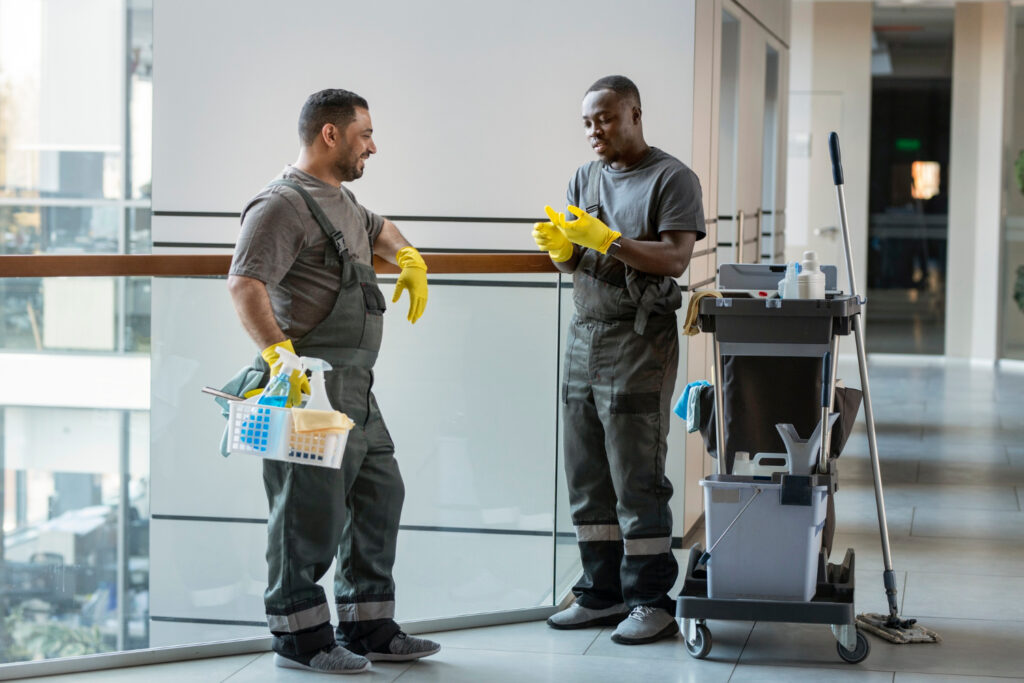
Los Angeles is packed with older buildings, historic warehouses, empty retail stores, old hotels, and outdated offices. Instead of tearing them down, developers are transforming them into lofts, creative workspaces, mixed-use buildings, and boutique apartments. This wave of adaptive reuse has changed how construction projects move across the city, and it has also changed what a final clean should look like.
At J&S Construction Clean Up, we’ve learned that construction clean up in Los Angeles for adaptive reuse is one of the most detailed, layered, and sensitive types of cleaning in the industry. These buildings carry years of dust, old materials, and structural quirks, and when new construction gets added on top, it creates a whole new set of cleaning challenges. That’s why final cleans for adaptive reuse projects require a special approach, one that respects the building’s history while preparing it for its next chapter.
Why Legacy Dust Is One of the Biggest Challenges
Older buildings have dust that behaves differently than the dust on a new construction site. It settles deep in cracks, inside old frames, behind pipes, and within insulation that may not have been touched for decades. When construction crews open walls or remove old fixtures, this “legacy dust” becomes airborne again.
During construction clean up in Los Angeles for adaptive reuse, we often deal with:
- soot from old heating systems
- insulation fibers
- grime that has hardened over time
- residue from past tenants or abandoned equipment
We handle all legacy dust with care. We follow lead-safe practices without crossing into abatement, staying compliant and keeping the workspace safe for everyone on-site.
Blending Old and New Materials Requires a Softer Touch
Adaptive reuse creates a mix of materials that don’t usually appear together. A single room might have:
- a brand-new drywall finish next to a 70-year-old brick wall
- reclaimed wood paired with polished steel
- modern glass windows inside an original storefront frame
This is where construction clean up in Los Angeles becomes more sensitive and skill-based. Older surfaces can scratch easily, while new surfaces can streak or cloud if the wrong product is used.
We test cleaning products before applying them to the full area, and we use tools designed for low abrasion. Our goal is to protect both the character and the new craftsmanship of the space.
The Risk of Micro-Abrasions on Polished and Restored Surfaces
Many adaptive reuse buildings feature:
- sealed brick
- polished concrete
- reclaimed wood flooring
- specialty metals
- clear-coated industrial beams
These surfaces can look stunning, but they are also easy to damage. Micro-abrasions, tiny scratches, can appear from simple mistakes like using the wrong mop head or scrubbing tool.
We prevent this by using microfiber systems, HEPA vacuums, and technique-based cleaning that avoids pushing grit around. Protecting these surfaces is a major part of high-quality construction clean up in Los Angeles, especially when developers expect a showroom-ready finish.
Cleaning While Tenants or Businesses Are Still Active
Unlike ground-up builds, adaptive reuse often happens in busy areas where some parts of the building are still in use. A tenant might be running a business downstairs while construction takes place upstairs.
This means the final clean must be done in phases and with extra attention to noise, dust control, and safe pathways. We often create:
- multi-phase cleaning schedules
- after-hours cleaning plans
- containment zones to control dust spread
This is one of the reasons construction clean up in Los Angeles for adaptive reuse requires more planning, communication, and crew coordination than a typical construction project.
Historic-Dust Remediation + New-Build Finishing at the Same Time
Adaptive reuse is unique because we must clean two eras of construction at once.
Historic dust includes particles that have built up for decades in old structures.
New-build debris includes drywall dust, sawdust, adhesives, caulk, and packaging from modern work.
On these projects, we remove:
- old grime inside vents and window tracks
- soot and fine debris from high beams
- new dust from sanding and cutting
- adhesive smudges from installation work
- paint splatters and concrete haze
Combining these two cleaning types makes construction clean up in Los Angeles especially complex. It’s not just a matter of sweeping and wiping. It’s about fully restoring a space so its original character shines without the mess left behind by construction.
What Contractors Often Underestimate
Many contractors assume adaptive reuse projects need the same cleaning steps as any other job. But once we walk the site, they realize it’s more challenging because:
- dust appears in layers, not just one
- older ventilation systems spread debris faster
- reclaimed surfaces require special care
- uneven floors and original framing create tight spaces
- tenants may still be using parts of the building
We’ve stepped into projects where crews expected a one-day turnover, only to learn it needed a three-phase clean to reach a true handover standard. This is why early planning matters and why a partner who understands adaptive reuse makes a big difference.
Why Adaptive Reuse Cleans Require Expertise
Los Angeles is growing upward and outward, but the city is also growing within. Developers are breathing new life into old structures, and these projects deserve a clean that respects both history and modern function.
At J&S Construction Clean Up, we approach construction clean up in Los Angeles for adaptive reuse with the right balance of care, technique, and efficiency. Our goal is always the same: deliver a space that feels refreshed, safe, polished, and ready for its next purpose.
Adaptive reuse is changing how the city looks, and we’re here to make sure every project ends with a clean finish that matches the effort put into the build.